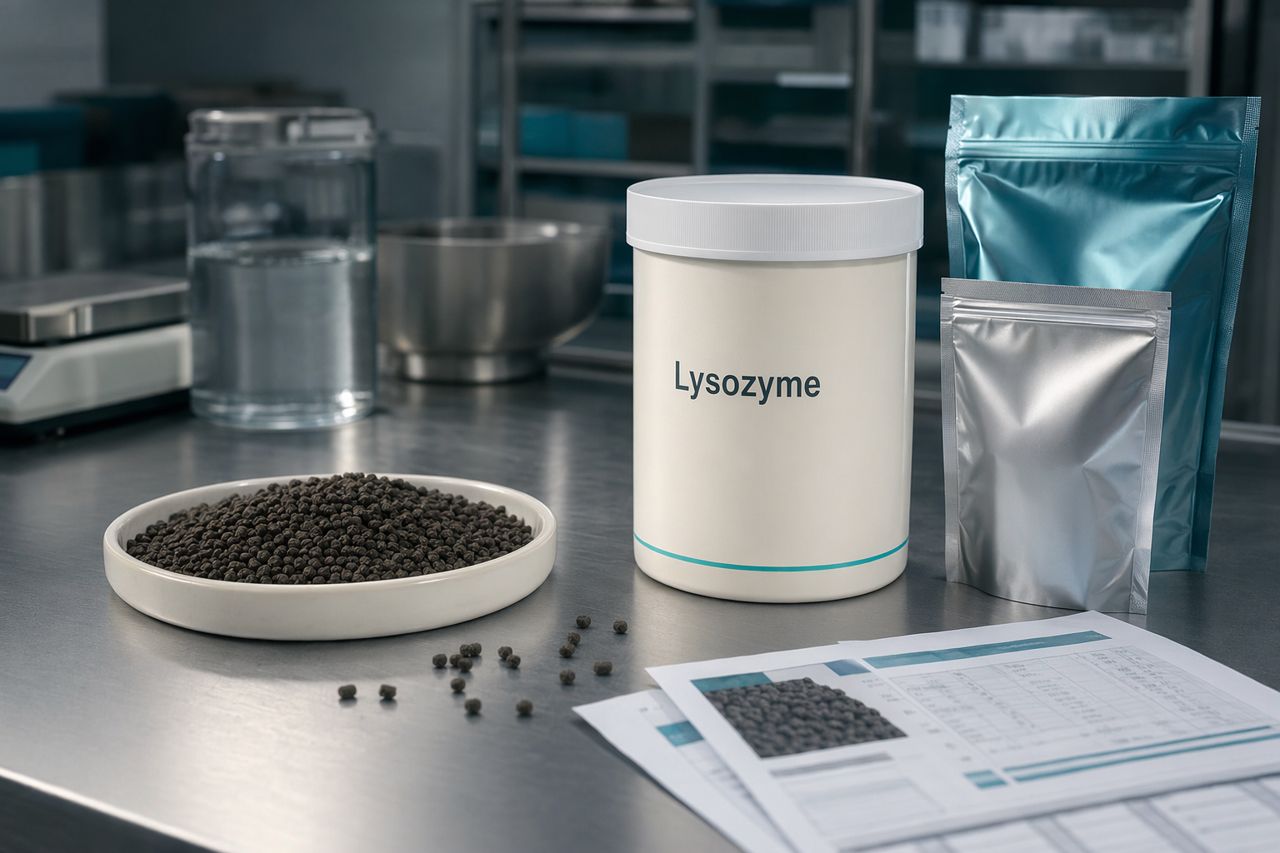
Lysozyme in aquaculture feed concepts
Aquaculture feed carries more than calories. It is a daily delivery system for gut conditioning, stress resilience, and microbial management across fish, shrimp, and hatchery programs. Lysozyme is considered by formulators where an enzyme-supported approach is being evaluated as part of a broader health and performance strategy.
Lysozyme is a muramidase enzyme that acts on peptidoglycan in bacterial cell walls. In feed applications, the commercial interest is not abstract biochemistry; it is whether the enzyme can be selected, protected, blended, documented, and supplied in a way that fits real production and purchasing constraints.
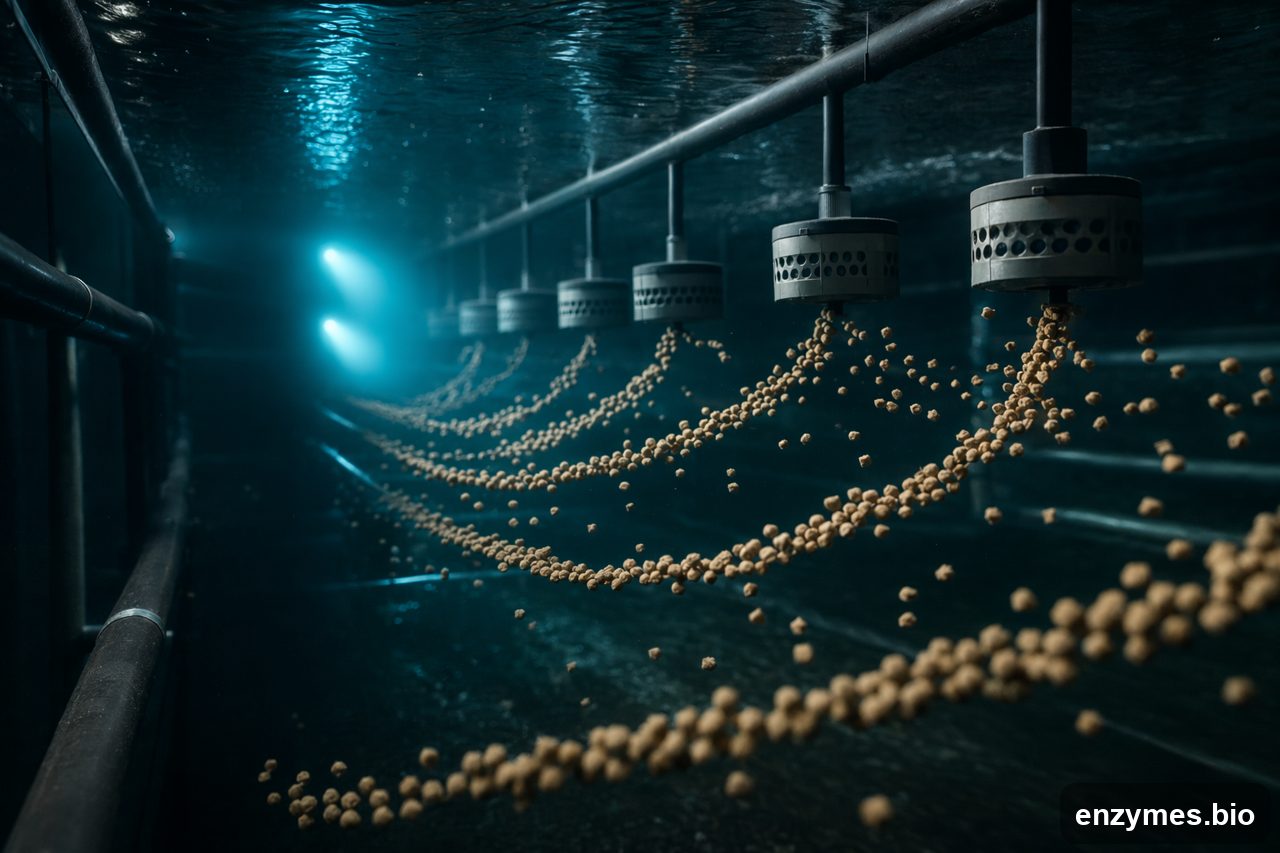
Lysozyme Enzyme Solutions supplies Lysozyme for B2B teams assessing aquaculture feed concepts where ingredient consistency, documentation, and formulation practicality matter.
Why aquaculture formulators evaluate Lysozyme
Aquaculture systems place animals under overlapping pressures: high stocking density, feed transitions, water-quality variation, handling stress, and microbial exposure from the production environment. These pressures can make gut integrity and microbial balance commercially relevant, especially where antibiotic reduction or functional feed differentiation is part of the program.
Lysozyme may be evaluated for:
- Microbial management support in feed concepts targeting gut balance.
- Health-oriented formulations for fish, shrimp, larvae, juveniles, broodstock, or recovery feeds.
- Antibiotic-reduction strategies where non-antibiotic functional ingredients are being compared.
- Premium feed positioning where a defined enzyme mechanism is preferred over vague botanical or undefined additive claims.
- Formulation platforms combining enzymes, organic acids, probiotics, yeast derivatives, immunonutrients, or protected micronutrients.
The strongest use case is usually not a single-ingredient promise. It is a controlled formulation strategy with defined species, feed format, processing route, and target market.
Functional mechanism: targeted pressure on peptidoglycan
Lysozyme cleaves glycosidic bonds within peptidoglycan, a structural polymer in bacterial cell walls. This mechanism is particularly relevant where Gram-positive organisms are part of the microbial pressure profile. In complex aquatic systems, its role is normally assessed as one part of a broader microbial-control and gut-support framework rather than as a standalone cure or treatment.
For formulation scientists, the key questions are:
- Which microbial pressure is relevant to the species and farming system?
- Does the feed format protect the enzyme through manufacturing and storage?
- Is Lysozyme compatible with the rest of the functional package?
- Can the supplier provide documentation suitable for feed customers and market access review?
Lysozyme Enzyme Solutions approaches Lysozyme as an industrial ingredient, not a marketing buzzword: consistent lots, clear documentation, and application-specific discussion before scale-up.
Aquaculture feed formats where Lysozyme may be considered
Pelleted fish feed
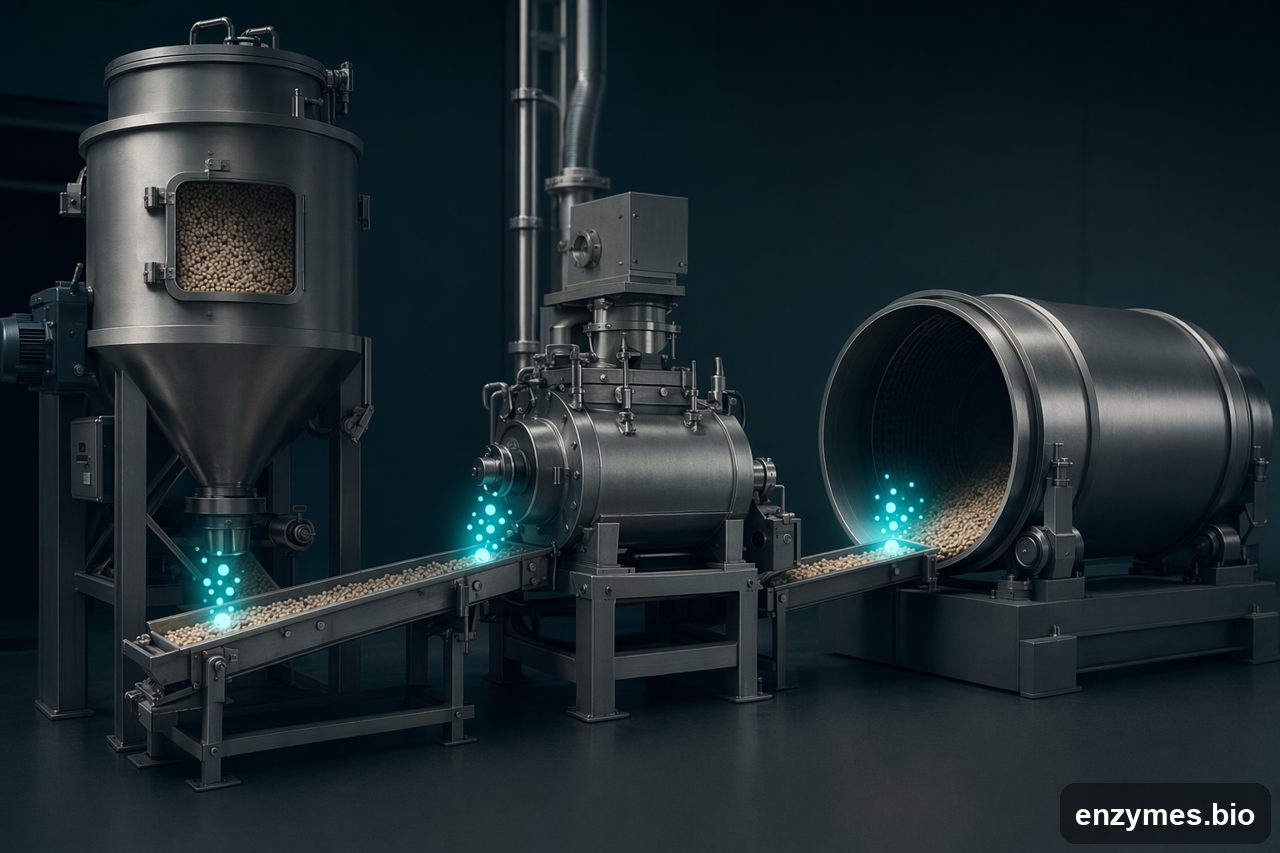
For pelleted diets, formulators typically review thermal exposure, moisture, residence time, post-conditioning handling, and storage conditions. Lysozyme selection may involve protected formats, post-process application, or premix design depending on the manufacturing route.
Extruded feed
Extrusion can place strong heat and shear demands on sensitive functional ingredients. When Lysozyme is being evaluated for extruded diets, process mapping is essential. The decision may involve whether the enzyme enters before extrusion, after drying, or through a coating system.
Shrimp feed
Shrimp formulations often require good water stability, palatability, binder compatibility, and controlled nutrient release. Lysozyme evaluation should consider how the ingredient behaves in the final feed matrix and how it fits with marine proteins, attractants, binders, oils, and immune-support additives.
Hatchery and nursery diets
Early-life feeds may justify more complex functional packages because the production value per animal can be high and the animals are more sensitive to environmental change. Lysozyme may be explored in microdiets, starter feeds, or transition diets where ingredient uniformity and careful handling are important.
Top-coated systems
Top coating can help avoid some processing exposure, but it introduces other considerations: coating uniformity, oil phase compatibility, dust control, packaging, and storage stability. Lysozyme Enzyme Solutions can support discussions on whether a dry blend, protected ingredient, or post-process format is the better commercial fit.
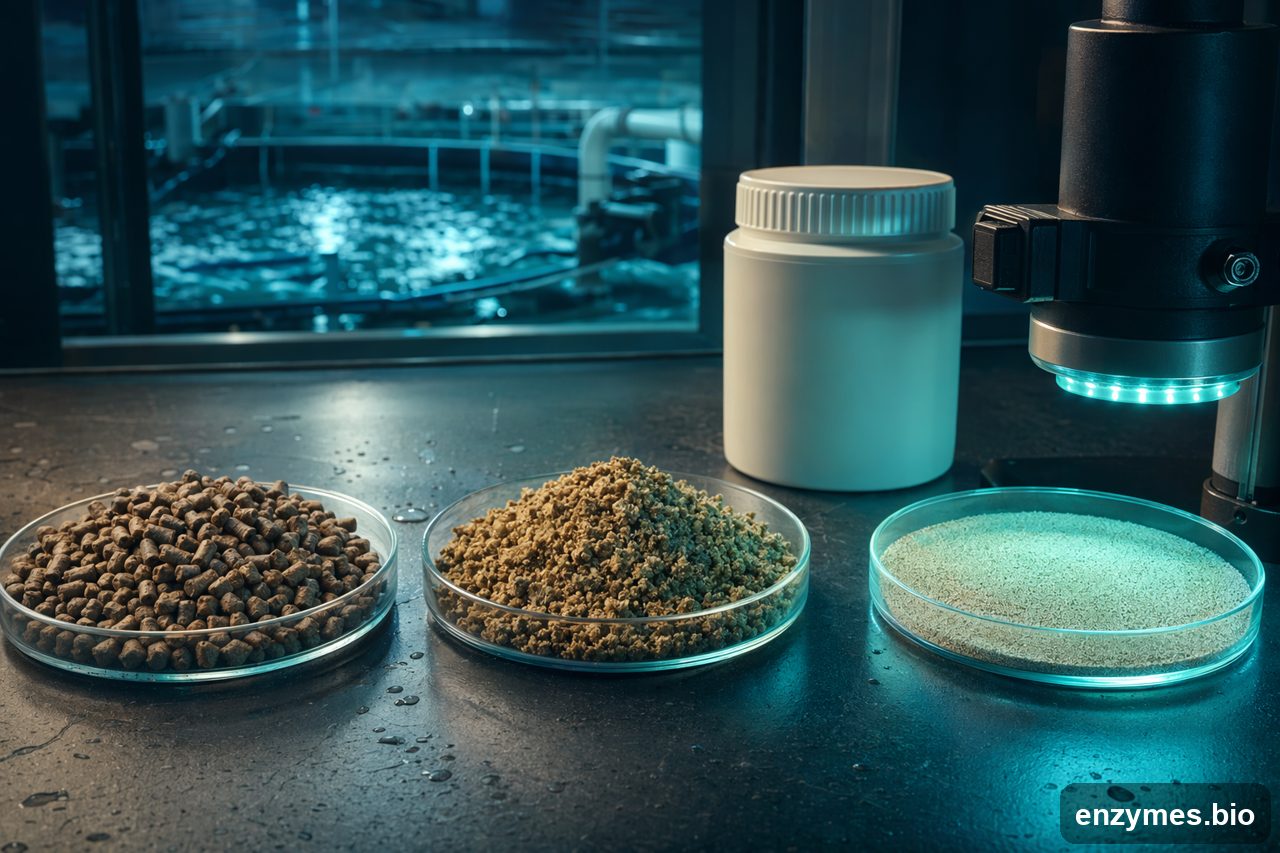
Formulation considerations for Lysozyme in aquaculture
1. Processing exposure
Heat, moisture, pressure, and residence time can affect enzyme performance. Before selecting a grade, map the process from premix to finished feed, including conditioning, extrusion, drying, cooling, coating, bagging, and warehousing.
2. Matrix compatibility
Aquaculture feeds are dense systems. Lysozyme should be reviewed for compatibility with:
- Fishmeal, poultry meal, soy proteins, and other protein sources.
- Marine oils, vegetable oils, and coating fats.
- Organic acids and acid salts.
- Mineral premixes and trace elements.
- Binders, attractants, pigments, and palatability systems.
- Probiotics, yeast fractions, nucleotides, and other functional additives.
3. Premix handling
Uniform distribution matters. Particle behavior, dusting tendency, segregation risk, and carrier choice can affect whether the ingredient is distributed consistently in the final feed.
4. Storage and packaging
Enzymes should be protected from avoidable moisture and harsh storage conditions. Commercial programs should specify packaging, resealing practice, warehouse exposure, and shelf-life expectations for the intended geography.
5. Species and market alignment
A salmonid program, tilapia diet, marine fish feed, shrimp nursery feed, and hatchery microdiet do not share the same technical priorities. The most efficient review starts with species, life stage, feed format, manufacturing process, and sales market.
Documentation B2B buyers typically request
Lysozyme Enzyme Solutions can support purchasing and technical teams with documentation appropriate to the selected grade and market pathway. Typical document requests include:
- Product specification.
- Certificate of analysis by lot.
- Safety data sheet.
- Ingredient origin declaration.
- Allergen and handling statements where applicable.
- Regulatory support information for feed-use review.
- Packaging, storage, and shelf-life guidance.
- Change-control and traceability discussion for repeat supply.
Because Lysozyme sourcing and regulatory classification can affect market access, documentation should be reviewed before commercial launch rather than after formulation lock.
Procurement notes: what to define before requesting pricing
To quote accurately, a supplier needs more than an ingredient name. Before requesting pricing, prepare the following details if available:
- Target species and life stage.
- Feed format: pellet, extruded feed, crumble, microdiet, mash, or top-coated product.
- Manufacturing route and whether post-process addition is possible.
- Expected annual or trial volume.
- Destination market and documentation needs.
- Preferred packaging size or warehouse handling constraints.
- Whether the project is R&D, pilot, commercial reformulation, or tender supply.
This information helps prevent mismatched quotes and avoids delays during specification review.
Where Lysozyme fits best
Lysozyme is most relevant when a feed team wants a defined enzyme mechanism, a clean documentation trail, and a practical route into industrial feed manufacturing. It is not a substitute for biosecurity, water management, vaccination strategy, or farm-level husbandry. It may, however, be a useful component in a coordinated program focused on gut resilience, microbial balance, and feed differentiation.
Lysozyme Enzyme Solutions works with formulators and procurement teams that need a commercially usable Lysozyme supply path: technical discussion first, then specification, documentation, sample review, and pricing.
Request a quote for Lysozyme aquaculture feed projects
Tell us how Lysozyme would be used in your aquaculture feed concept. We will review the application, documentation needs, and supply fit before quoting.
Prefer a shorter first step? Use the same form and write get pricing in the project notes.