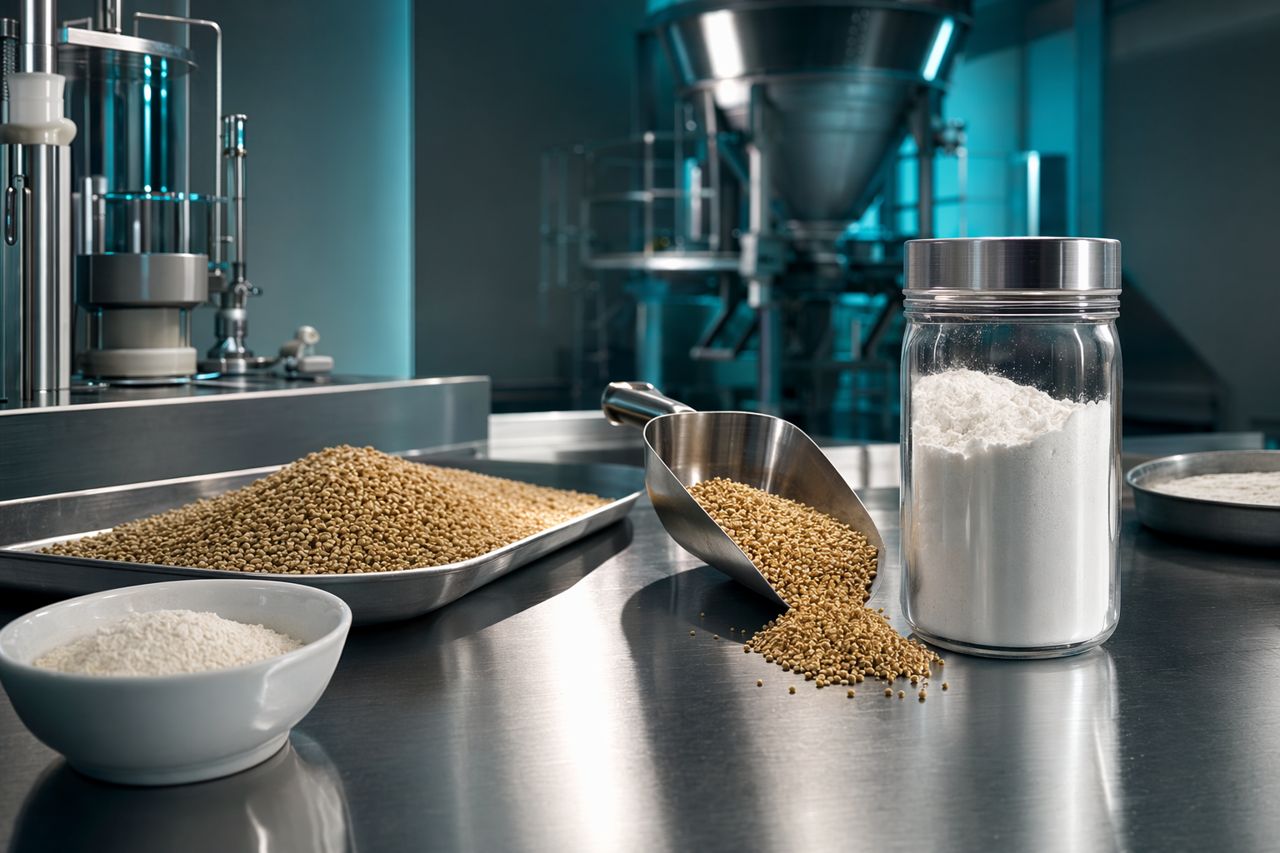
Lysozyme for Animal Feed Applications
Lysozyme is used in animal nutrition programs where formulators want targeted microbial pressure support without redesigning the entire ration. In feed systems, Lysozyme acts on peptidoglycan in bacterial cell walls, with particular relevance to Gram-positive organisms. For producers and feed manufacturers, the commercial interest is straightforward: support gut-health-oriented formulations, reduce instability in sensitive life stages, and create room for more precise feed strategies in poultry, swine, aquaculture, and other production animals.
Lysozyme Enzyme Solutions supplies Lysozyme for B2B feed and premix evaluation, with documentation and specification support aligned to industrial procurement rather than catalogue buying.

Why feed teams evaluate Lysozyme
Animal feed applications are rarely about one ingredient acting alone. Lysozyme is typically considered as part of a broader program involving nutrition density, acidification, probiotics, organic acids, mineral balance, hygiene, and farm management.
Formulation teams evaluate Lysozyme for:
- Gut microbial balance support in early-life and transition-stage animals
- Antimicrobial support concepts where bacterial cell wall disruption is relevant
- Feed programs seeking non-traditional functional additives for differentiated nutrition claims, subject to local regulation
- Poultry and swine formulations where intestinal resilience and feed efficiency are core commercial targets
- Premix and specialty additive systems requiring a defined functional enzyme input
Lysozyme does not replace good feed hygiene, veterinary oversight, or validated production practices. It is best positioned as a controllable functional component within a disciplined nutrition strategy.
Functional role in the digestive environment
Lysozyme hydrolyzes bonds within peptidoglycan, a structural component of bacterial cell walls. When susceptible bacterial walls are weakened, cells become more vulnerable to osmotic stress and other environmental factors.
In animal feed development, this mechanism is valued because it is:
- Mechanistically specific rather than broadly nutritive
- Compatible with gut-health formulation logic when paired appropriately
- Relevant to microbial ecology discussions in poultry, swine, and young animal systems
- Useful in concept development for antibiotic-reduction or antibiotic-stewardship programs, where permitted and substantiated
The practical outcome depends on species, age, diet composition, farm conditions, inclusion strategy, and the full additive system.

Application areas
Poultry nutrition
In poultry, Lysozyme may be evaluated in starter, grower, and specialty programs where gut integrity and litter-related downstream outcomes matter. Formulators often assess it alongside organic acids, essential oil systems, probiotics, butyrate sources, and mineral optimization.
Relevant poultry considerations include:
- Starter feed sensitivity and early microbial establishment
- Interaction with coccidiosis management programs
- Compatibility with pelleted or crumbled feed formats
- Distribution uniformity in premixes and complete feed
- Label and claim language by destination market
Swine nutrition
Swine programs often evaluate Lysozyme around nursery and post-weaning stress windows, where feed intake, intestinal adaptation, and microbial pressure are critical. Lysozyme may be considered in functional additive blends designed to support resilience during ration changes.
Relevant swine considerations include:
- Nursery feed palatability and additive load
- Premix homogeneity at low inclusion rates
- Thermal exposure during pelleting or conditioning
- Compatibility with acidifiers, zinc alternatives, and gut-health additives
- Farm-level trial design with measurable production endpoints
Other production animals
Lysozyme may also be explored in aquaculture, young ruminant, pet nutrition, and specialty livestock feeds depending on regulatory position and application objectives. In these cases, formulation work should begin with stability, palatability, processing exposure, and local compliance review.
Formulation and processing considerations
Lysozyme is a protein enzyme, so feed manufacturing conditions matter. The key question is not only whether Lysozyme is present in the formulation, but whether it remains functionally suitable after blending, conditioning, pelleting, storage, and delivery.
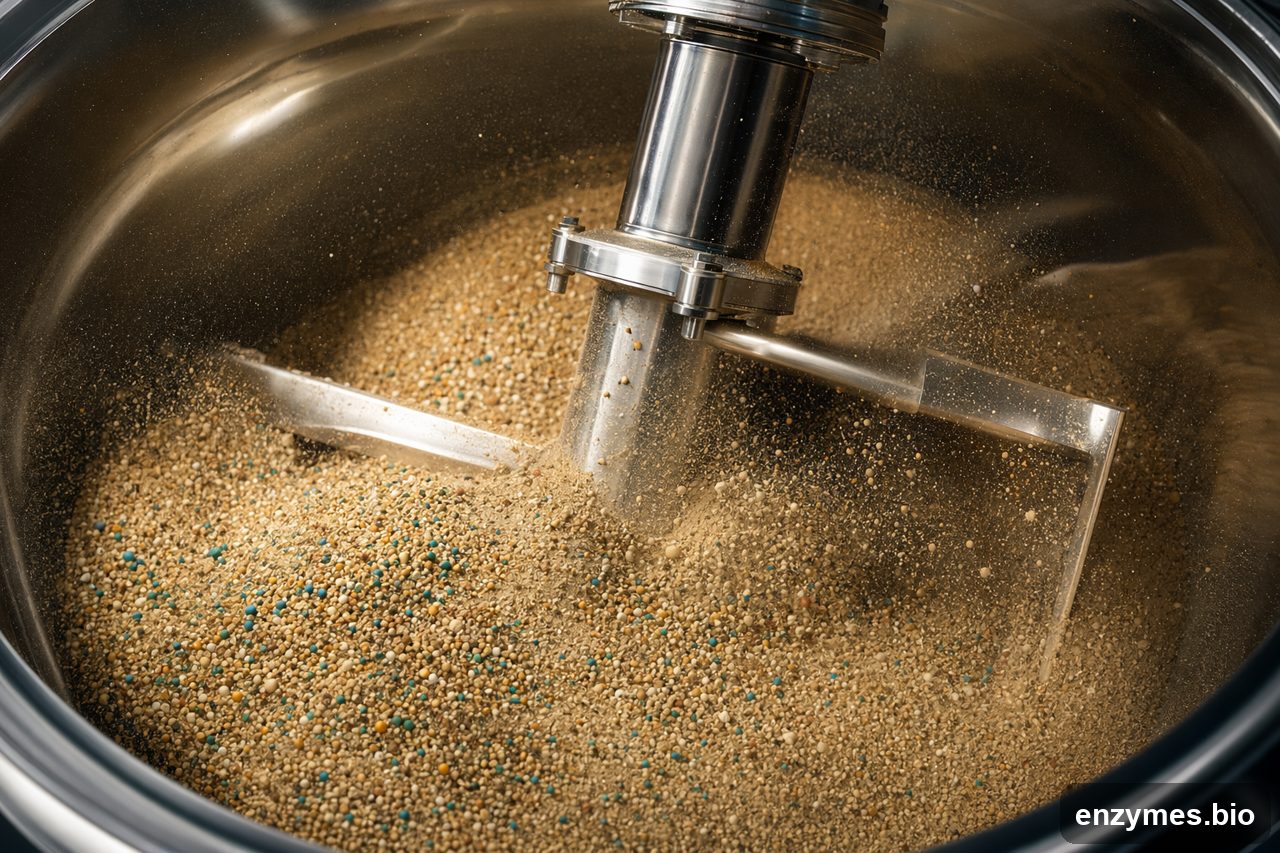
Critical development checks include:
- Thermal exposure: evaluate conditioning temperature, residence time, and post-pellet alternatives
- Moisture and water activity: assess storage stability in premixes and finished feed
- pH environment: consider performance in the intended digestive and formulation context
- Premix carriers: confirm compatibility with minerals, acids, choline sources, and hygroscopic ingredients
- Blend uniformity: validate dispersion in micro-premixes before scale-up
- Packaging: select barrier protection appropriate to humidity and storage duration
Where heat exposure is severe, teams may assess protected formats, staged addition, liquid application, or separate premix handling.
Procurement criteria for feed-grade Lysozyme
For commercial feed use, buyers need more than a technical data sheet. Lysozyme Enzyme Solutions supports qualification discussions around specification fit, batch consistency, origin, documentation, and supply continuity.
Typical procurement review points include:
- Feed-suitable specification profile
- Consistent physical form and flow behavior
- Microbiological and contaminant controls
- Allergen, animal-origin, and source documentation where applicable
- Country-of-sale regulatory documentation support
- Shelf-life and storage guidance
- Packaging options for pilot, premix, and production-scale use
- Lot traceability and certificate availability
We do not publish trader-confidential activity-unit positioning or assay methods on this page. Technical qualification details are handled directly with vetted B2B buyers under the appropriate commercial context.
Building a trial program
A useful Lysozyme evaluation should be designed around production decisions, not abstract ingredient curiosity. Before sampling, define the target species, life stage, feed form, processing conditions, additive stack, and the endpoint that will determine whether the material moves forward.
Common trial endpoints include:
- Feed intake and feed conversion trends
- Growth or weight-gain consistency
- Mortality or morbidity observations where relevant
- Litter, manure, or waterline-related operational indicators
- Veterinary or microbiological observations when part of the protocol
- Economic return against additive cost
Lysozyme Enzyme Solutions can support sample planning, documentation review, and commercial pack-size discussion for feed manufacturers, premix companies, distributors, and integrated producers.
Regulatory and claim discipline
Lysozyme status, permitted use, labeling, and claim language vary by jurisdiction and animal category. Feed teams should confirm local requirements before commercial use or market-facing claims.
Lysozyme Enzyme Solutions can provide product documentation for buyer review, but final compliance decisions remain with the feed business, its regulatory advisors, and destination-market authorities.
Request pricing or technical qualification
If you are evaluating Lysozyme for poultry, swine, aquaculture, or another animal feed program, share the target application and processing route. We will respond with availability, documentation fit, and commercial next steps.
Prefer a shorter commercial reply? Use the same form and write get pricing in the project notes.