Lysozyme for dairy processors
Late blowing, cracks and slits that appear weeks into ripening turn a full vat of hard or semi-hard cheese into downgraded stock. Lysozyme gives dairy processors a targeted control point against the gram-positive spore-formers behind these defects, and Lysozyme Enzyme Solutions supplies it in bulk to cheese plants, dairy-ingredient blenders and the distributors who serve them, quoted per order.
For dairy teams, the value is not simply microbial control. It is process protection: fewer avoidable defects, more predictable ripening, and a clearer control point when raw material quality, seasonal variation, or long maturation windows increase risk. Send your cheese type, annual volume and destination market and we quote grade, pack and documents for that order.
Wholesale and bulk supply for manufacturers, distributors and resellers. Every lysozyme order is quoted individually. Request a quote with the grade or application, the quantity you need and the destination country.

Where Lysozyme fits in dairy
Lysozyme is most relevant where gram-positive bacteria are part of the spoilage challenge. In cheese, it is commonly evaluated for control of organisms associated with late blowing, including clostridial risks in susceptible hard and semi-hard cheese systems.
Typical application areas include:
- Hard and semi-hard cheeses with long maturation cycles
- Cheese types exposed to late blowing risk from spore-forming gram-positive bacteria
- Dairy processes where gas formation, cracks, slits, or texture defects are recurring concerns
- Formulations where preservative strategy must be compatible with flavor, ripening, and regulatory expectations
- Process environments where incoming milk quality varies by season, feed, geography, or supplier base
Lysozyme is not a broad-spectrum preservative for every dairy challenge. It is best used when the target organisms, cheese style, and process conditions support its mode of action.
What dairy lysozyme preparations look like when you buy them
Many offers aimed at dairy plants are not pure lysozyme but a compound lysozyme preparation: lysozyme blended with beta-glucanase on a maltodextrin carrier.
These preparations are sold as a dairy preservative that holds back the butyric fermentation caused by contaminating bacteria, which is the fault behind late blowing and gas in ripened cheese.
The same preparation is usually also listed for food, feed and pharmaceutical uses, so ask which use the documents for your lot actually cover.
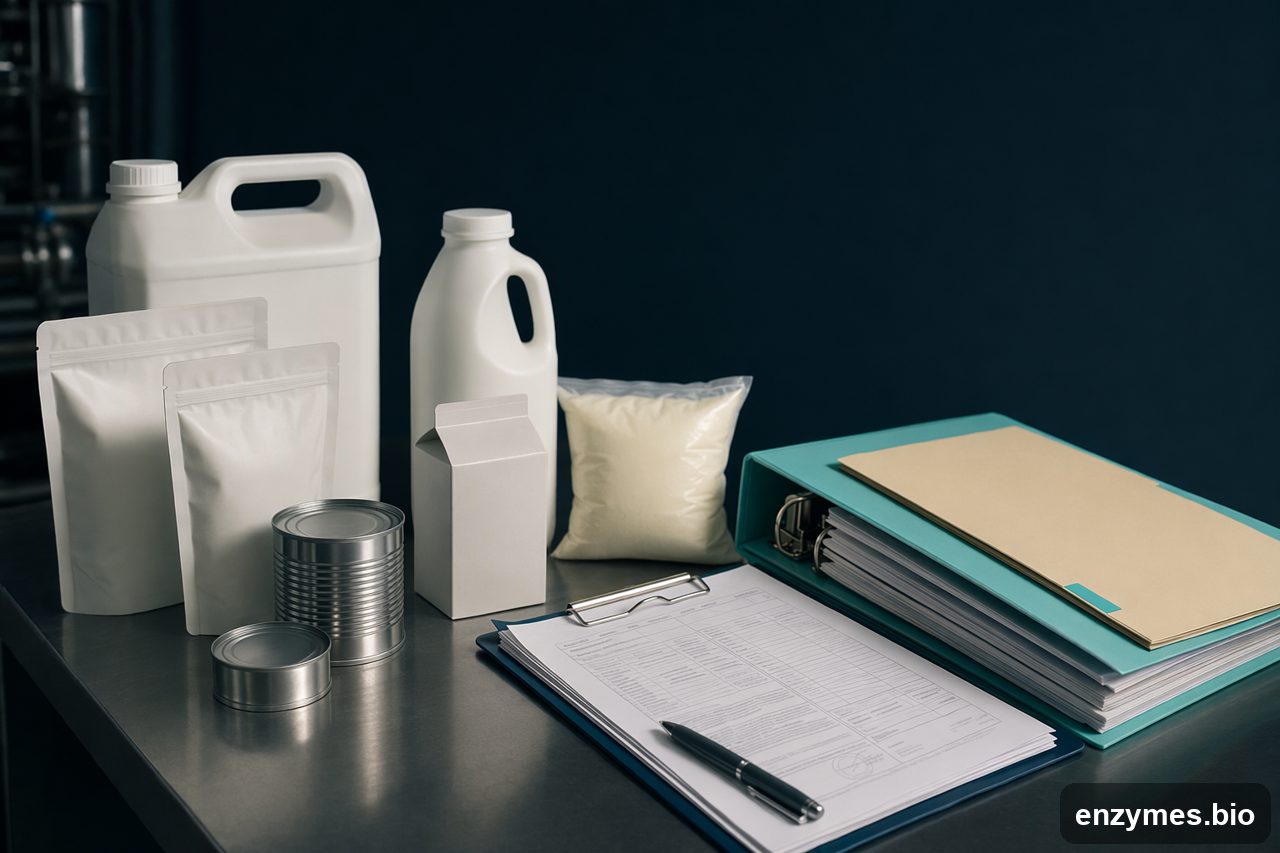
Typical packing is a 1 kg bag for trials and smaller plants and a 25 kg drum for production volumes, with a stated shelf life of 12 months.
| What you are offered | What the offer states |
|---|---|
| Compound dairy preparation | Lysozyme with beta-glucanase and a maltodextrin carrier, sold against butyric late blowing |
| Pack and shelf life | 1 kg bag or 25 kg drum, 12 months stated shelf life |
Common buying mistakes:
- Dosing a compound preparation as if it were pure lysozyme; the label share of active enzyme decides the real addition rate.
- Expecting it to stop early blowing from gram-negative coliforms; the preparation is sold against butyric late blowing.
- Buying a year of stock in one lot against a 12-month shelf life.
Functional role in cheese systems
Lysozyme targets the structural integrity of susceptible bacterial cell walls. In cheese processing, this can help reduce the activity of selected gram-positive bacteria before they create visible or sensory defects during maturation.
Operationally, that means Lysozyme can support:
- Reduced risk of late gas formation in susceptible cheeses
- Better protection against cracking, slitting, and unwanted eye formation linked to spoilage activity
- More stable maturation outcomes across long holding periods
- Lower risk of downgrades caused by microbial texture defects
- A preservative approach that can fit within established cheese-making workflows
Process considerations
Lysozyme performance depends on the dairy matrix, the target organism, addition point, pH, salt, moisture, heat exposure, and ripening conditions. Formulation teams should evaluate it in the actual cheese system rather than relying on a generic assumption of performance.
Key development questions include:
- Which organism or defect is being controlled? Late blowing risk, gas defects, and spoilage pressure should be clearly characterized.
- Where is the right addition point? The ingredient should be introduced where dispersion and contact are reliable without unnecessary exposure to conditions that reduce functional performance.
- How does it interact with starter and adjunct cultures? Culture compatibility should be assessed for the specific cheese style and maturation target.
- What are the labeling requirements? Commercial Lysozyme is commonly associated with egg-derived sourcing, so allergen declaration and market-specific labeling must be reviewed.
- What defines success? Evaluation should include gas formation, texture, flavor, ripening profile, microbial challenge data, and release criteria.
Benefits for commercial dairy operations
For cheese manufacturers, Lysozyme can help convert an unpredictable defect risk into a managed formulation variable. This is especially relevant when product value is tied to long ripening, export specifications, or premium texture expectations.

Commercial advantages may include:
- Lower risk of batch loss or downgrade during maturation
- Improved consistency across seasonal milk variation
- Better control of late defects in high-value cheese styles
- Support for quality release decisions with fewer surprises late in aging
- A targeted antimicrobial strategy for gram-positive spoilage concerns
Specification priorities for buyers
Procurement and technical teams should align on the specification before price comparison. Important supply criteria include:
- Consistent Lysozyme identity and enzyme profile
- Dairy-suitable physical format for handling and dispersion
- Controlled microbiological quality
- Clear allergen and origin documentation
- Batch-level traceability
- Regulatory documentation for intended market use
- Technical support for pilot trials and scale-up
- Packaging suitable for plant storage and production conditions
The lowest-cost offer is not always the lowest-risk option. In cheese applications, variability can appear months after production, so supplier consistency and documentation matter.
Quality and regulatory notes
Lysozyme use in dairy is market- and application-dependent. Teams should confirm permissions, maximum permitted use where applicable, allergen labeling, and finished-product claims for each sales region.
Because egg-derived Lysozyme may trigger allergen declaration requirements, regulatory review should be completed before commercial launch, customer approval, or export registration.
Trial design guidance
A practical Lysozyme evaluation should compare treated and untreated cheese under realistic production and ripening conditions. Include the actual milk supply, cultures, make procedure, brining or salting conditions, packaging, and maturation window.
Recommended evaluation outputs:
- Defect incidence over ripening
- Gas formation and package behavior where relevant
- Cheese texture and cut surface observations
- Sensory profile and flavor development
- Starter and adjunct culture performance
- Finished-product compliance with internal and customer specifications
- Cost-in-use analysis based on defect reduction and quality retention
Request pricing or technical support
Ready for a quote? Use the inquiry form at the foot of this page. Tell us the product or application, the quantity, your preferred pack and the delivery country; price, available documents and lead time are quoted per order.
Lysozyme Enzyme Solutions supplies dairy manufacturers, dairy-ingredient distributors and resellers with lysozyme in bulk. Share your cheese type, process target, volume, market and documentation needs, and we respond with fit, availability and a quote for that order.